
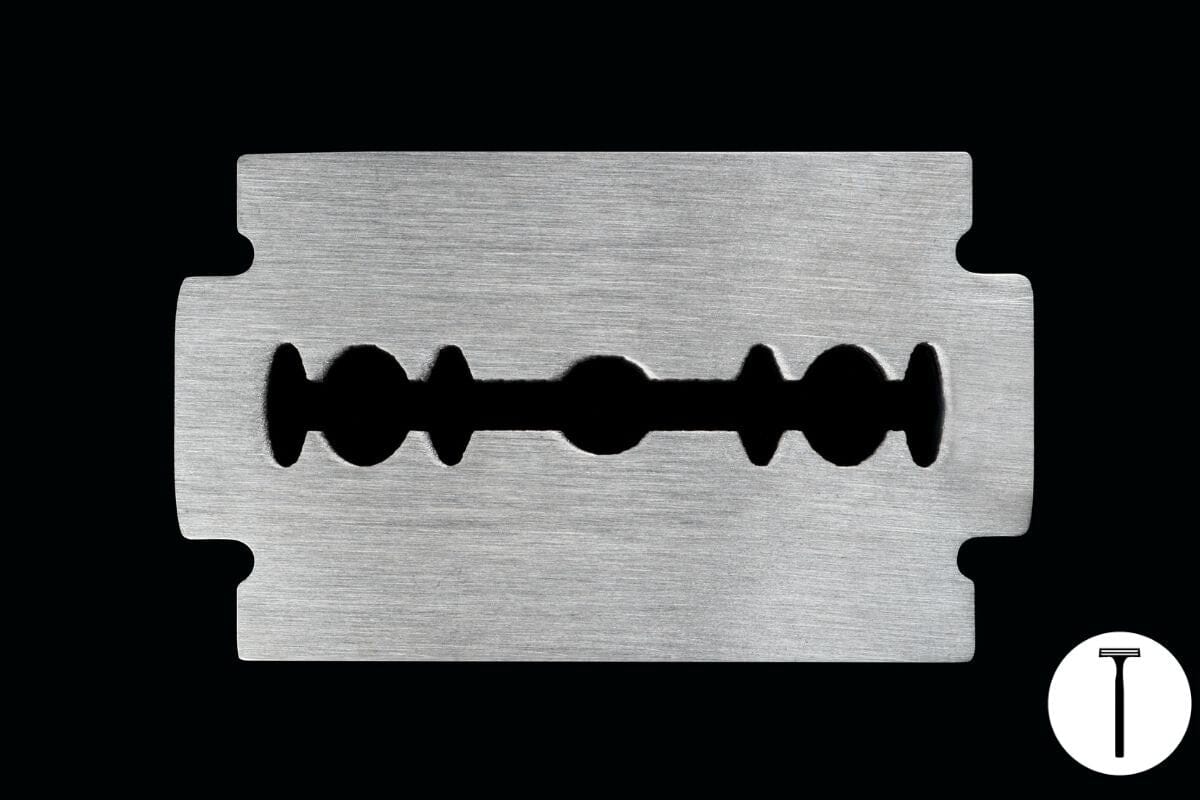
The Case for the Safety Razor (And Why It's Not Going Anywhere) Long before disposable cartridges and battery-powered foil heads, there was one tool doing the job: a single, precisely angled blade. It's called the safety razor, and it's been quietly outperforming almost everything that's come after it for over a century.
A Quick History
The safety razor showed up in the late 1800s as a response to the straight razor - brilliant in the right hands, but unforgiving in anyone else's. King Camp Gillette patented the double-edge safety razor in 1901, and by the World Wars it was standard-issue gear, shipped by the millions to soldiers who needed a reliable, low-maintenance shave in the field. For most of the 20th century, it was simply the way men shaved - until plastic cartridges took over shelves in the '70s and '80s, trading precision for convenience (and razors for profit margins). The safety razor never actually went anywhere. It just got quieter, kept alive by guys who noticed cartridges weren't actually solving their skin problems.
Why It Still Beats Disposables and Electric Foils
A single, fixed blade angle. Cartridge razors stack 3, 5, sometimes 6 blades, each one tugging at the hair before cutting it - that's multiple passes over the same patch of skin in a single stroke. A safety razor uses one blade, held at a precise angle, for one clean pass. Less tugging means less irritation.
Fewer ingrown hairs. Multi-blade cartridges are notorious for cutting hair below the skin's surface, which is exactly how ingrowns start. A single-blade cut sits at skin level, so hair grows back out normally instead of curling under.
No pressure, no burn. Foil electric shavers rely on pressing the head against your skin to catch hair, which builds heat and friction over a full shave. A safety razor's weight does the work for you - you barely need to press at all.
It costs pennies to run. A pack of double-edge blades costs a few dollars and lasts months. Cartridge refills are priced like they're doing you a favour.
*It's not disposable. A good safety razor is a piece of hardware, not a subscription. Buy it once, replace a blade when it dulls, and it'll outlast every cartridge razor you've ever owned.
Is It Right for You?
If you've dealt with razor burn, ingrown hairs, or just feel like you're re-buying razors constantly, a safety razor is worth the (short) learning curve. It takes a shave or two to get the angle intuitive - after that, it's the easiest part of your routine. Curious where to start? Come by the counter or [browse our safety razor lineup] - we're always happy to talk through what fits your shave.


